EcoDialogues: Space for Clarity in Uncertain Times

EcoDialogues: Space for Clarity in Uncertain Times

Change is a constant—often accompanied by complexity, ambiguity, and the need to make decisions amid competing priorities. For individuals, leaders, and organizations navigating today’s shifting terrain, clarity can be hard to find. EcoDialogues is designed precisely for these moments, creating practical, reliable space to pause, reflect, and move forward with confidence.

The Practical Power of Structured Dialogue

All too often, advice and one-size-fits-all strategies miss the unique realities that organizations and individuals face. EcoDialogues offers a different approach: a structured, dialogue-based process anchored in research, practice, and an understanding of how people actually experience transitions.

EcoDialogues recognizes that genuine clarity doesn’t arise from instructions or external opinions, but from within—from the space to reflect on what’s really going on for you and those you work with. This is especially valuable for anyone:

  • Navigating change or organizational transformation
  • Facing complex, high-stakes decisions
  • Striving for more meaningful, values-driven leadership
  • Looking to strengthen collaboration in situations where diverse perspectives matter

How EcoDialogues Works

At its core, EcoDialogues is a three-session experience, available both online and in-person, that guides participants through a deep, practical exploration of themselves, their relationships, and the broader systems they inhabit.

1. Internal Space: Reflection That Matters

The first session focuses on your internal landscape: your values, beliefs, and the assumptions—often unspoken—that shape your actions. Through guided questions, somatic cues, and time for reflective silence, you’ll begin mapping what’s actually driving your current choices and uncertainties.

Reflection session

Rather than asking, “What should I do?” EcoDialogues invites the deeper questions: “What matters most to me right now? What truths am I carrying—and what might I be leaving out?” This stage provides a reliable, confidential space to access your own insight before entering dialogue with others.

2. Shared Space: Witness and Be Witnessed

Many of our toughest challenges involve others: teammates, colleagues, communities, or boards. The second session shifts focus to relational dialogue. Unlike debate or brainstorming, EcoDialogues doesn’t rush toward consensus. Instead, it’s about genuinely witnessing and being witnessed—making room for each participant’s experience to matter.

Through intentional, respectful conversation, the group uncovers how different internal spaces interact, overlap, or conflict. This kind of space is rare in today’s fast-paced culture, and it’s essential for moving beyond surface fixes toward genuine mutual understanding.

Shared space dialogue

3. The Field: Action In Context

Insight has its greatest impact when it’s grounded in real-world context. The final session expands the view to consider the larger field: organizational culture, societal systems, and external pressures that shape what’s possible (and what’s not).

Here, the process draws connections between the clarity gained in the first two sessions and the broader systems at play. This practical step ensures that insight is translated into action, supporting ethical decisions, durable collaboration, and cultural change that sticks.

The field impact

Why This Approach Works

EcoDialogues is anchored in the understanding that space is not emptiness—it’s the fertile ground where new ideas, ethical action, and transformation can emerge. Rather than rushing to fill every silence or solve every issue, the process creates a container for:

  • Honest self-inquiry
  • Reflection on what really matters
  • The discovery of shared purpose
  • Productive engagement with difference

The philosophical foundation is robust, drawing from fields like moral philosophy, ecopsychology, Taoism, Ubuntu, organizational development, and leadership studies. Dialogue here is not just a technique, but a method for softening rigid assumptions and letting collective insight arise.

Who Benefits from EcoDialogues?

EcoDialogues is highly practical for a wide range of contexts:

  • Individuals: Facing personal or professional crossroads, seeking clarity about next steps, or wanting to realign with their values amid shifting circumstances.
  • Leaders: Confronting the ambiguity of change management, cultural shifts, or balancing stakeholder interests.
  • Teams and Organizations: Wanting to move past surface-level performance culture, toward shared meaning, trust, and ethical presence.
  • Values-Aligned Partners: Navigating collaborative projects, partnerships, or systemic initiatives where diverse perspectives are a strength, not a barrier.

No prior experience is necessary—just a willingness to pause, reflect, and participate in open dialogue. The process is designed to fit the real world: sessions are kept focused, accessible, and action-oriented.

Practical Outcomes You Can Expect

Participants in EcoDialogues consistently report several benefits:

  • Clarity amid complexity: Making sense of what’s urgent versus what’s important, and naming the assumptions at play.
  • Shared language: Building common ground across roles, backgrounds, and viewpoints.
  • Action you can use: Identifying—together—one practical next step that can be taken immediately.
  • Cultural strengthening: Normalizing reflection and candor, which are essential to trust, innovation, and performance.

What Happens in a Session?

Here’s what to expect during a 30-minute introductory EcoDialogues session:

  • Welcome & consent: Set context, ensure confidentiality, and agree on how insights may be used (2–3 minutes).
  • Identifying what’s present: Bring forward a real question, tension, or decision you’re holding (7–10 minutes).
  • Exploring assumptions: Surface what feels “obviously true,” consider alternatives, and appreciate different perspectives (10–12 minutes).
  • Integration & next steps: Name any shifts in perspective and clarify one concrete move you can make now (5–6 minutes).

Longer three-session cycles for organizations and teams dig deeper into group dynamics and the field of influence.

How EcoDialogues Promotes Inclusion and Equity

Unlike many leadership and organizational programs that unconsciously reinforce unexamined assumptions, EcoDialogues intentionally creates room for a wide range of voices, backgrounds, and lived experiences. Where most approaches default to what’s already familiar (and who’s already heard), this process makes it safe and normal for new perspectives to matter—including those that have historically been marginalized in decision-making.

Accessible, Confidential, and Donation-Based

UYM Charities is committed to ensuring EcoDialogues remains accessible and open to all. Sessions are offered both online and in-person, and no one is turned away for lack of funds. The process is confidential, with optional opportunities for anonymous learnings to be shared more widely (always with your consent).

Your participation also helps us continuously learn and improve. By making EcoDialogues a living, open-source resource, we invite everyone to shape how transformative dialogue can serve communities now and in the future.

Take the Next Step

Navigating change, making complex decisions, or seeking a more meaningful approach to leadership and collaboration doesn’t have to be a solitary journey. EcoDialogues offers a grounded, practical path for moving forward—individually and together.

To learn more or schedule a session, visit uymcharities.org/contact. If you’d like to support this work, donations are always welcome and tax-deductible. UYM Charities is a registered 501(c)(3)—your contribution helps keep EcoDialogues accessible to everyone. To donate, visit uymcharities.org/support.

Practical outcomes collaboration


Welcoming Gi Indoccio: Our First Aging Well Practitioner

Welcoming Gi Indoccio: Our First Aging Well Practitioner

Finding Peace Is Simpler Than You Think

What if peace was as close as your next breath? Imagine, just for a moment, pausing—really pausing—to notice where you are, right now. That’s where Gi Indoccio, our very first Aging Well practitioner at UYM Charities, begins her work. For Gi, clarity starts with presence. Through the gentle art of mindfulness and Reiki, she helps older adults uncover a quiet, transformative power within.

Participants in Gi’s sessions have shared something remarkable: when someone listens with true presence, the world just seems to slow down. For many, her sessions are the first time in ages they’ve felt heard, seen, and at peace. We’re excited to welcome Gi to our team and to introduce her approach to holistic aging in the UYM Charities community.

About Gi Indoccio: A Compassionate Guide

With more than 20 years of experience in counseling and holistic health, Gi Indoccio has built her career around supporting people as they navigate life’s transitions. She is a Licensed Clinical Mental Health Counselor (LCMHC) and a Board-Certified Life Coach—bringing both professional expertise and a heart for healing.

Gi holds a Master’s in Counseling and Applied Psychology from Antioch University, along with a Bachelor’s in Business Administration and Marketing from Plymouth State University. For decades, she has worked in varied environments, including major mental health centers, hospital behavioral health units, and her own private practice. Through each of these chapters, one thread stands out: Gi’s commitment to nurturing well-being from the inside out.

Gi!

The Aging Well Approach at UYM Charities

Aging brings with it many opportunities, but also unique challenges—emotional, physical, and social. At UYM Charities, our Aging Well program is built around the principle that aging is not just about adding years to life, but about adding life to your years.

Gi’s integrative methods perfectly align with this mission. She combines evidence-based mental health practices—like Mindfulness-Based Stress Reduction (MBSR) and Mindfulness-Based Cognitive Therapy (MBCT)—with energy healing arts like Reiki. This blend helps older adults manage anxiety, depression, grief, and the day-to-day stress that sometimes comes with aging.

Our Aging Well sessions with Gi aren’t just another support group. They’re a chance for participants to:

  • Develop mindfulness skills for coping with uncertainty
  • Learn gentle relaxation and breathing techniques
  • Experience guided imagery to spur healing and self-discovery
  • Receive attentive, non-judgmental support from both Gi and their peers
  • Reconnect to their values—discovering calm, clarity, and meaning

You’ll find more about the Aging Well program on our program page.

Meet Mindfulness and Reiki: Tools for Real Life

Mindfulness and Reiki might sound mystical, but they’re very grounded when practiced with Gi. Here’s what they look like in practice:

  • Mindfulness: Gi teaches simple ways to pay attention to your breath, sensations, or thoughts, which can help ease anxiety and spark clarity. You don’t have to sit cross-legged or chant—just being present is enough.
  • Reiki: This gentle healing art uses soft, intentional touch or near-touch to help the body relax and recharge. People often report feeling lighter, more grounded, and less weighed down by worries.
  • Guided Imagery: Gi leads participants in easy, imaginative journeys that help tap into inner wisdom and promote a sense of well-being.

All these tools are proven to help manage the ups and downs of aging—empowering older adults to face challenges with more resilience and grace.

Why Integrative Health for Older Adults?

Older adulthood can bring big transitions: retirement, shifts in social roles, changes in health, or even just the challenge of staying connected in a noisy world. At UYM Charities, we believe that supporting the whole person—body, mind, and spirit—leads to real well-being.

Integrative health means blending the best of medical, psychological, and complementary therapies to:

  • Ease anxiety, depression, and grief
  • Enhance sleep, appetite, and energy
  • Promote independence and purpose
  • Foster meaningful social connection
  • Strengthen the body’s natural ability to heal

Gi’s presence with us means our Aging Well program becomes even more personalized, driven by both science and compassion.

gentle movement class community

Join Us for Aging Well

UYM Charities is thrilled to have Gi Indoccio as part of our team. She’s here to walk alongside you—to listen, encourage, and help you find new ways of caring for yourself.

If you or a loved one would like to learn more about our Aging Well programs, click this link for details, upcoming session times, and registration info. Or contact us with any questions.

Let’s age well, together—welcoming each moment, each breath, each chapter.


How do you rediscover calm in a noisy world? Share your thoughts, experiences, or questions in the comments below. And from all of us at UYM Charities, welcome Gi!

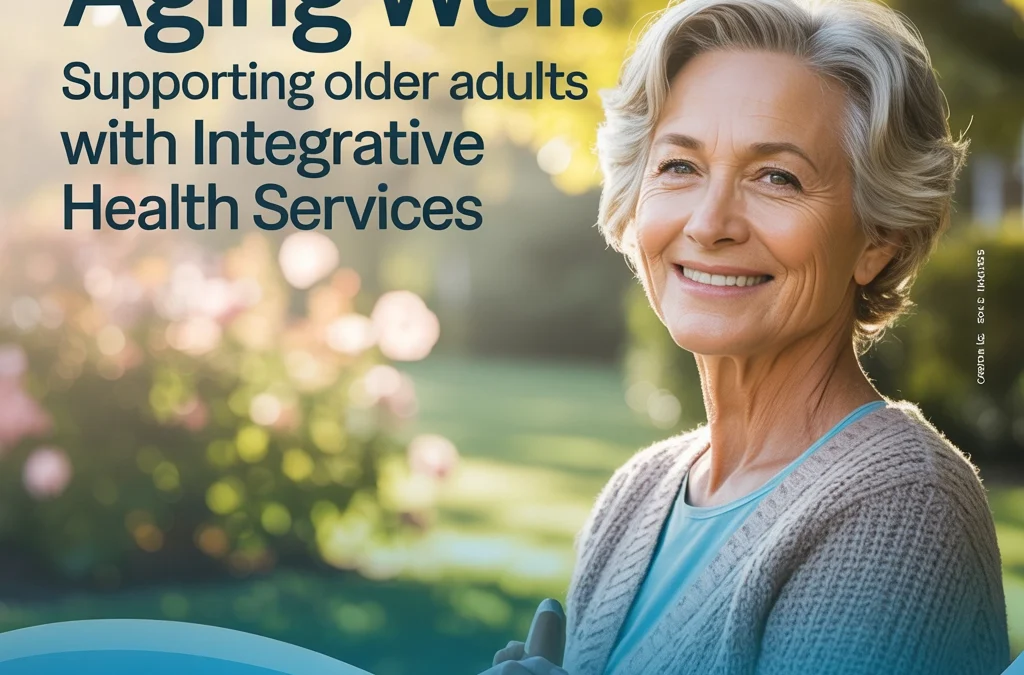
Aging Well: Supporting Older Adults with Integrative Health Services

Aging Well: Supporting Older Adults with Integrative Health Services

As we age, our needs and priorities shift. The journey of aging can be full of joy, meaningful connection, and ongoing growth—but it also brings unique challenges. At UYM Charities, we believe that older adults deserve support that honors the whole person: body, mind, and spirit. That’s where integrative health services come in.

What Is Integrative Health?

Integrative health is more than a buzzword—it’s a patient-centered approach that combines the best of conventional medicine with evidence-based complementary therapies. Instead of just treating diseases or isolated symptoms, integrative care looks at every aspect of a person’s life. This includes physical health, emotional well-being, mental health, lifestyle, social connections, and a sense of purpose.

Why does this matter for older adults? As we age, we’re more likely to juggle multiple health conditions at once. Integrative health tackles complexity head-on, working to boost both day-to-day function and long-term well-being.

Key Principles of Integrative Care for Older Adults

  • Whole-person focus: Care is tailored to each person, considering physical, mental, social, and environmental needs.
  • Coordination across providers: Doctors, nurses, therapists, social workers, and family members collaborate on a shared care plan.
  • Preventive mindset: The goal isn’t just to treat illness, but to help people stay active, independent, and engaged for as long as possible.
  • Patient empowerment: Older adults are partners in decision-making, so care respects their values and choices.

Components of Integrative Health Services

1. Conventional Medical Care

Regular check-ups, screenings, medications, and acute illness care remain foundational for older adults. But integrative health doesn’t stop there—it expands the toolkit.

2. Complementary and Holistic Therapies

Depending on individual needs and preferences, these therapies might include:

  • Acupuncture
  • Massage
  • Yoga and tai chi
  • Art or music therapy
  • Herbal supplements (with careful coordination from medical providers)

Research shows these approaches can help manage chronic pain, reduce anxiety, improve sleep, and boost mood.

Integrative yoga for older adults

3. Nutrition and Physical Activity

Healthy eating and movement are vital at every age, but especially so for older adults. Integrative care might include:

  • Nutrition counseling
  • Cooking classes featuring anti-inflammatory foods
  • Personalized exercise programs
  • Mobility and balance workshops

These interventions help prevent falls, build muscle, and support heart health.

4. Emotional and Social Support

Isolation, loneliness, and depression are significant